Episode Transcript
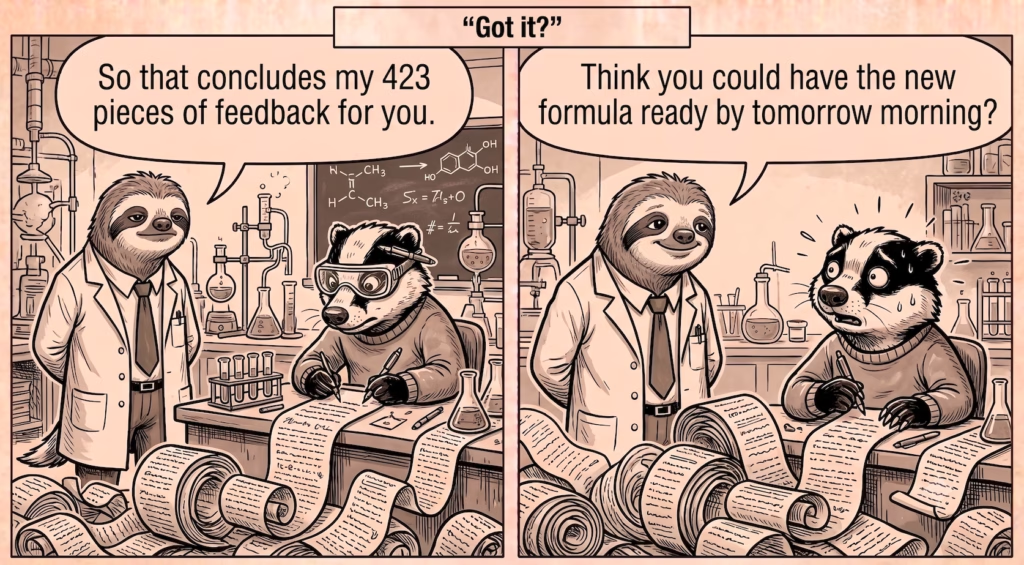
The Processing Feedback tab card states, “Receiving feedback leads to processing feedback, a skill that involves slowing down and reflecting before acting. And the suit’s guide is the sloth. They are intentional, so they’re confident when they move. Processing feedback calls for that same deliberate pace.”
So let me tell you why this suit is personal for me. Years ago, I was a high performer at a Fortune 100 company. I received feedback I couldn’t make sense of. And when I went looking for resources on what to do next, how to evaluate it, how to decide whether it fit in my career, how to work with everything it stirred up in me, almost nothing existed.
The guidance out there jumped straight from say thank you to build a plan as if the spaces between receiving feedback and using it were empty. That space is where this entire suit lives. It may be the most neglected phase in all of feedback literacy, and I argue it’s the one where the most important work happens.
The sloth is the perfect guide here, and maybe not for the reason you’d guess. Sloths aren’t slow because they’re lazy, they’re intentional, and that intention is exactly why they’re confident when they move. That’s the trade the suit offers. Deliberate pace now, confident action later. The arc of these 10 cards moves from what I see as evaluation to decision.
The early cards help you assess what you’ve received, checking the credibility of the source, because feedback can be a mirror, and mirrors can be grimy. Sorting everything into bins, adopt, adapt, ignore, because you are the curator of your own growth, and some data doesn’t belong in your museum. And searching for patterns, since a single comment is a snapshot, while several may be, may more accurately reveal what’s actually there, including, as I learned the hard way, patterns of positive feedback we’ve been refusing to let in.
The middle cards go inward and outward at once. Inward, toward the emotions feedback stirs up, treating defensiveness as a map pointing to something you want to protect, and turning toward the discomfort rather than reaching for the snack, the scroll, the channel change. Outward toward calibration, bringing feedback to people who know you, because processing feedback alone, while possible, can kind of shrink the picture a bit despite whatever the bootstrap myth taught us.
And the final cards insist on an ending, permission to discard what you’ve genuinely analyzed and found wrong. Selecting the one element with the biggest impact rather than trying to attempt everything, and then finally, the verdict, because processing that never ends in a decision can become rumination that is not helpful.
Believe me, I’ve been there more times than I can count. That’s the Processing Feedback Suit, 10 cards for slowing down so that when you move, you move like the sloth.
Don't Just Keep Up.
Define the New Rules.
3-Minute Reframe isn't just another newsletter. It’s where new language for modern leadership is forged. Explore some of the frameworks shaping the future of personal and professional growth.